
A standard homeowners insurance policy consists of six primary coverages that work together to provide broad property and liability protection. Whether your home needs to be rebuilt after a storm or a guest falls down your stairs, home insurance can help reduce your out-of-pocket expenses when recovering from a covered loss.
Working with a local Bearingstar Consultant is the best way to understand your specific policy. In the meantime, here are some general insights into how home insurance works to safeguard your property, belongings, and loved ones.
Bearingstar Shares
- Which parts of your homeowners policy can help you recover after a covered event damages your property or belongings
- Which home insurance coverages can help protect you from lawsuits involving a guest’s injury or someone else’s property damage
Home Insurance Coverages
Dwelling Coverage (Coverage A)
Dwelling coverage protects your home’s structure, including its roof. It helps pay to repair or rebuild your home—up to your policy’s limits—if it’s damaged or destroyed in a covered event. This coverage also extends to attached features such as a garage, deck, or porch.
Commonly covered events, or perils, include:
- Fire
- Hail
- Hurricanes
- Lightning
- Theft
- Tornadoes
- Vandalism
Floods and earthquakes are typically excluded from standard homeowners policies and require separate coverage. Your specific policy will indicate which types of perils are covered and which are not.
Your dwelling coverage limit is based on what it would cost to completely rebuild your home following a covered loss. This amount also helps determine the coverage levels for other parts of your policy, many of which are set as percentages of your dwelling limit.
Your policy also has a deductible, which is the amount you are responsible for paying out of pocket before your coverage begins. Most home insurance deductibles generally fall between $1,000 and $5,000.
However, some policies include a separate, larger deductible for losses caused by wind, hail, or hurricanes. It will typically be listed as a percentage of your dwelling coverage. For example, if you have $750,000 of coverage on your home with a 2% wind deductible, your out-of-pocket responsibility would be $15,000.
Keeping your dwelling coverage current is important. Construction costs change frequently, and improvements to your home can increase the cost to repair or rebuild it. Projects like finishing your basement, upgrading your kitchen, or adding a sunroom can add value to your home and impact your coverage needs.
A local Bearingstar Consultant can help you estimate your home’s replacement cost and adjust your policy as changes occur.
Other Structures Coverage (Coverage B)
Other structures coverage helps to repair or replace the many types of stand-alone structures surrounding your home, such as:
- Detached garages
- Fences
- Gazebos
- In-ground swimming pools
- Tool sheds
These structures are generally covered for the same types of events as your home, including fire and storm damage.
Protection is typically limited to 10% of your policy’s dwelling coverage. For example, if your home is insured for $750,000, you would typically have $75,000 for other structures. This amount can be increased if you have multiple or high-value detached structures on your property.
As with other home insurance claims, your deductible applies and reduces the amount your insurance company pays out.
Your local insurance team at Bearingstar can help you determine which structures on your property qualify as an “other structure” and how much coverage is right for you.
Personal Property Coverage (Coverage C)
Personal property coverage helps cover the cost of replacing your belongings after a covered loss. This can include:
- Appliances
- Clothing
- Electronics
- Furniture
- Sports and outdoor equipment
- Tools
- And more
Contents kept in your property’s detached structures also fall under this coverage.
Coverage limits typically range from 50% to 70% of your dwelling coverage, depending on your specific policy. For example, if you carry $750,000 of coverage on your home, your personal property coverage may fall between $375,000 and $562,500.
Home insurance policies can pay personal property claims in one of two ways:
- Actual cash value (ACV): ACV coverage takes depreciation into account and is therefore the cheapest option. It reimburses you for what an item is worth based on its age and condition, not what you originally paid for it. This can create a gap between how much you’re reimbursed and how much it costs to replace the item today, leaving you to pay the difference out of pocket.
- Replacement cost value (RCV): For a relatively small premium increase, RCV coverage removes depreciation as a factor. Instead, you’re reimbursed for the full cost of replacing an item with a similar one at today’s prices, even if costs have risen over time.
Regardless of how your claim is settled, your total payout is still subject to your policy’s deductible and overall personal property coverage limit.
Your personal property coverage may also be subject to the following limitations:
- Belongings stored off premises are often limited to 10% of your personal property coverage. For example, if your coverage limit is $375,000, up to $37,500 would apply to items kept in a storage unit.
- Theft of valuable items such as jewelry, firearms, artwork, and collectibles is generally capped between $1,000 and $2,500. If you own higher-value items, you’ll want to discuss additional protection options with your insurance agent. A Scheduled Personal Property Endorsement allows you to insure expensive pieces, like an engagement ring or antique sculpture, for their full appraised value, typically with no deductible.
To help make filing a claim easier, maintain a detailed record of all your belongings. Include each item’s description, purchase date, estimated value, serial number, and receipt, if available.
The Bearingstar team created a downloadable home inventory for your use.
Loss of Use Coverage (Coverage D)
Loss of use coverage (also referred to as additional living expenses) can help cover your increased living costs when a kitchen fire, severe windstorm, or other covered event makes your home unsafe to live in. It can reimburse you for temporary costs related to:
- Staying at a hotel, rental home, or apartment
- Eating at restaurants
- Renting a storage unit
- Boarding pets
- Doing laundry at a laundromat
The coverage limit is generally set at 20% to 30% of your dwelling coverage. For example, if your policy insures your home for $750,000, it will likely provide between $150,000 and $225,000 for the eligible expenses you incur.
There’s typically no deductible associated with loss of use claims, but time limits may apply. Most policies will provide benefits for 12 to 24 months following a loss.
Additionally, loss of use coverage only applies to costs above your normal living expenses. It won’t help you make your monthly mortgage payment, for example.
If you’re confused about what qualifies as an extra expense, a Bearingstar Consultant can help answer your questions. Make sure you keep track of what you spend, along with the receipts so we can submit them as part of your claim.
Personal Liability Coverage (Coverage E)
Personal liability coverage helps cover your defense costs, legal fees, and settlements or judgments if you’re sued for accidentally injuring someone or causing damage to their property. It can help in instances such as:
- A delivery driver slips on your porch after an ice storm.
- Your child accidentally breaks your neighbor’s window.
In general, we don’t recommend choosing a liability limit below $300,000. Higher coverage amounts may be appropriate for many homeowners, especially those who own a pool, hot tub, trampoline, or dog as these can increase the likelihood of a loss occurring.
Some families may also benefit from an umbrella insurance policy, which can provide additional lawsuit protection on top of your homeowners and auto insurance liability.
One of our Bearingstar Consultants can help you determine whether your current liability limits are suitable for your home, assets, and lifestyle.
Medical Payments Coverage (Coverage F)
Medical payments coverage helps pay for someone else’s medical bills, ambulance fees, or health insurance copays when they’re injured on your property. It typically offers between $1,000 and $5,000 of coverage per person without a deductible.
This coverage is often referred to as a “goodwill payment” because its goal is to avoid a large lawsuit for small injuries. For example, if your friend trips over your child’s toy and sprains their ankle, their medical bills may be covered without an official liability claim.
Medical payments coverage is a type of no-fault insurance, so it can provide benefits whether you caused the incident or not. This differs from your liability protection. While personal liability coverage may help pay to defend you in a lawsuit, it only covers settlements or judgments you’re held legally responsible for.
Regardless of what happened, contact your local Bearingstar team as soon as an injury occurs so we can help evaluate the situation.
Smart Coverage Starts Here. Connect With the Bearingstar Team Today.
What Else Do You Want to Know About a Homeowners Policy?
One of our main goals at Bearingstar is to make sure insurance is never complicated or confusing. Below, we provide simple and straightforward answers to a few of the most common home insurance questions we get from clients.
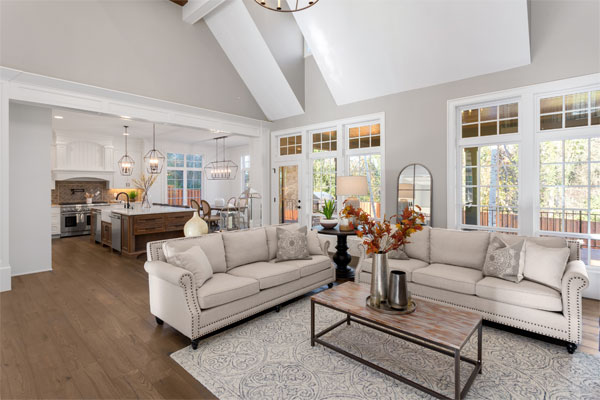
In a typical homeowners policy, there are six main coverage areas—Dwelling, Other Structures, Personal Property, Loss of Use, Personal Liability, and Medical Payments—that together provide broad property and liability protection.
What Does Home Insurance Cover?
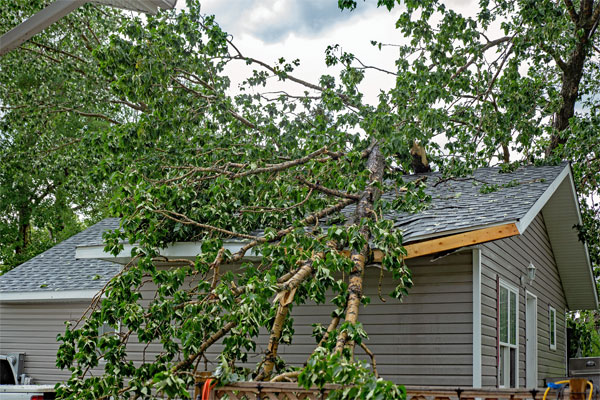
There are a variety of disasters that can cause damage to your property. Thankfully, home insurance may provide coverage for around 16 common hazards, including fire, lightning, theft, and falling objects like trees.
How Much Does Home Insurance Cost?
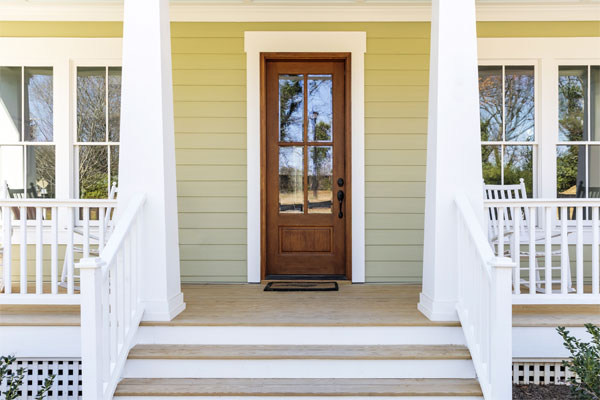
While there are many factors insurers use when setting a homeowner’s policy premium, the primary variable is a home’s replacement value, which is the actual cost to rebuild a house to its pre-loss condition if it is destroyed.